


On Wednesday (Sep 18), the Federal Reserve made a significant move, cutting the Fed Fund Rate for the first time in over four years. The benchmark rate was slashed by 0.5%, bringing it down to a range of 4.75% to 5%.
If you are not familiar with Fed Fund Rate, you should read this article: Fed Fund Rates: Impact and History That Only the Pros Know.

In the article, we will discuss how the stock market reacts, the possible outcome for interest rate direction and the stock market in the future.
How Did the Market React?
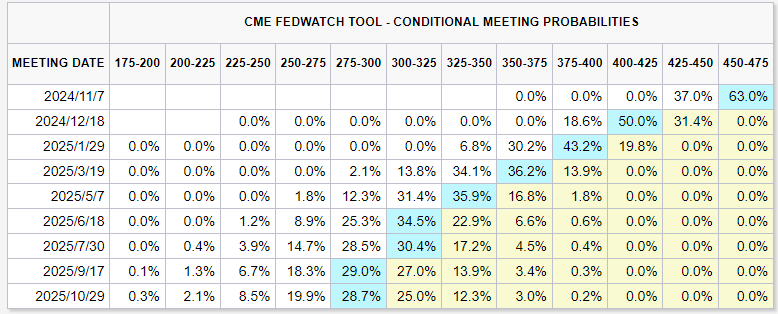
Some say this rate cut is larger than expected because many analysts predicted a modest 0.25% reduction. But if you pay attention, the futures market had already priced in a 0.5% cut, which explains the rally of bonds and REITs recently.
The market’s muted response wasn’t surprising to me, given the priced-in cut. My concern was whether there would be profit-taking, especially since the S&P 500 has risen nearly 18% this year. A pullback after hitting record highs isn’t unexpected.
Notably, while larger indices remained flat, small and mid-cap stocks remained strong. This could mean continued confidence in the U.S. economy and the Fed’s ability to manage it.
What About Future Rate Cuts?
The Fed emphasized that this cut wasn’t in response to labor market weakness. Jerome Powell stressed that the labor market is strong, and this action aimed to maintain that strength.
I believe the Fed is catching up after missing opportunities earlier this year. Historically, regulators have acted late, as seen in the previous rate hike cycle.
Although Powell hinted at less aggressive future cuts, the Fed’s dot plot shows 10 out of 19 officials favor another 0.5% cut or more by year-end.

However, the market is mostly expecting a 0.25% cut in November, with a divided view of 0.75% points or more in total rate cuts by year-end.
What Will Happen To The Stock Market Moving Forward
History offers valuable insights. According to Evercore ISI research,
- In non-recessionary periods, the S&P 500 has averaged a 14% gain six months following a Fed rate cut.
- During recessions, this average flips to a 4% decline.
The chart below shows the historical look at the US stock performance, represented by the S&P 500 index, after the first rate cut.

Only three of the last eight rate cuts were as large as 50 basis points.
- In 2001 and 2007, these cuts preceded recessions and significant market declines.
- In 1987, however, a similar cut helped the economy avoid recession, and the market soared.
We can think about this cut as a signal of the Fed’s commitment to a soft landing. If the US did avoid recession, this move should support stocks.
Traditionally, sectors like healthcare, financials, communications, real estate, consumer staples, and utilities benefit from rate cuts. The infographic below shows the historical US stock sector performance after the fist rate cut.

Let Me Summarize…
The Federal Reserve’s 0.5% rate cut signals its commitment to supporting the economy amidst market volatility. It could be a preemptive measure to stave off future economic challenges.
Historically, rate cuts during non-recessionary periods have been followed by stock market gains, and a recession may cause the market to tank.
While the stock market initially surged, it quickly paused. This is within my expectation because the market has largely priced in the good news, and there is no surprise.
Looking ahead, I anticipate increased volatility in the near term, and it could even potentially lead to small corrections due to profit-taking. Nevertheless, I remain moderately bullish on the market in the mid-term. Sectors like healthcare, financials, and real estate are worth looking at.
To navigate this landscape, it’s essential to focus on investing in high-quality companies and sectors poised to benefit from the rate cuts, rather than speculating for quick gains.
The infographic in this article is courtesy of moomoo, my preferred platform for stock trading. Click here to explore the latest promotion to open a moomoo account.
If you enjoyed this article, subscribe to my mailing list below.