


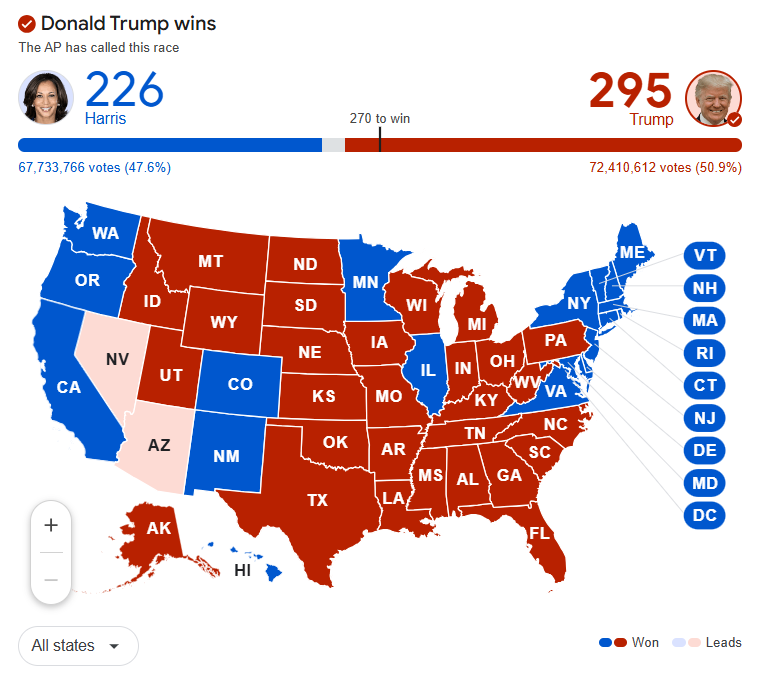
The world was watching as Donald Trump was re-elected as the 47th President of the United States. His victory in the latest US Election marks the beginning of what I would call Trump 2.0—a new era that will have significant implications for policy, the economy, and financial markets. In this article, I’ll share my initial analysis of what this means for investors. I used the word “initial” because the market is ever-changing.
The world is unplannable, unpredictable, governed by the hidden tides of chaotic factors and buffered by butterfly wings.

Why Should Singapore Investors Care About The US Election?
To begin, we need to understand why investors pay so much attention to the US election, probably more than the one in our own country.
When the US Fed or Government made policies, they didn’t really care about the rest of the world. They don’t care a rapidly rising interest will cause some companies or even countries to go bankrupt; they don’t care the trillions of newly printed US dollars will cause asset bubbles that will burst badly eventually.
The fact is that the ripple effects of any change in the US will be felt globally. For Singapore, with its open economy and strong trade ties to the US, the impact of his presidency will be significant. In fact, you can see from the chart in the later part of the article, that Singapore’s STI had a negative performance during Trump’s first term.
For the man on the street, here are the areas that will affect you even if you are not investing:
- Interest Rates: Trump’s Presidency will influence global interest rate movements, which will directly affect your mortgage rates, deposit interest rates, and even your Treasury bill (T-bill) and SSB returns in Singapore.
- Inflation: Trump’s policies aimed at stimulating domestic production and protecting US interests will likely lead to inflationary pressures, which would affect both the US and global markets, including Singapore. That means you need to prepare for a higher price tag in your daily supply in the next few years.
Now, let’s dive deeper.
The Red Sweep: Policy and Market Implications
A “red sweep” refers to the Republican Party’s potential control of the presidency, House of Representatives, and Senate, which would remove significant legislative obstacles and allow Trump to push forward his agenda more swiftly.
There are many things that Donald Trump has promised, and below are some key policies that matter to us:
Immigration
Trump’s administration may take a harder stance on immigration, including limiting benefits for undocumented immigrants, increasing deportations, and scaling back public assistance. This could also affect labor markets and certain sectors of the US economy.
If you think about it, this will cause wage inflation as less cheap labours are available.
Corporate Tax Cuts and Trade Tariffs
Trump has expressed support for extending the tax cuts introduced during his first term, including lowering corporate tax rates further. This could benefit the US companies, especially in the short term.
But, Trump’s potential imposition of a 20% tariff across all imports, along with tariffs of up to 60% on Chinese goods, would disrupt global trade dynamics.
Rationally speaking, a higher tariff for foreign goods is nice to hear for an election speech, but it doesn’t help the locals. At the end of the day, the higher goods cost has to be paid by the Americans themselves. So it is another push for inflation.
Deficit and Interest Rate Payment
With less tax income, more government spending. It is only rational to assume that the US deficit will increase.
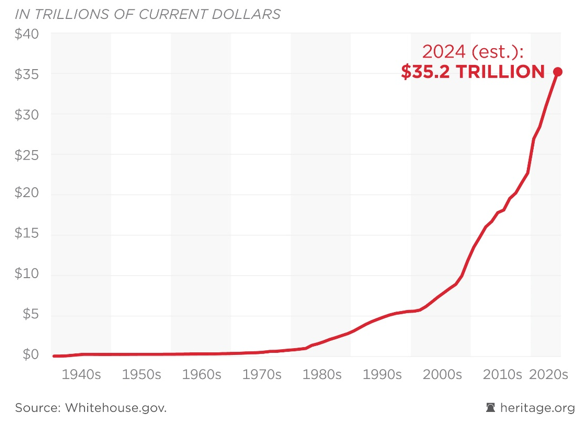
In fact, the US fiscal deficit is expected to reach 7% of GDP by 2024, and debt servicing costs exceed 2% of GDP annually.
The US owes the world US$35.2 Trillion now and the interest payment itself is already US$1 Trillion a year. Is it easier to repay the debt or just cut the interest rate?
Let’s not forget Trump has always been advocating a low-interest-rate environment and that is one of the promises he kept during his term.
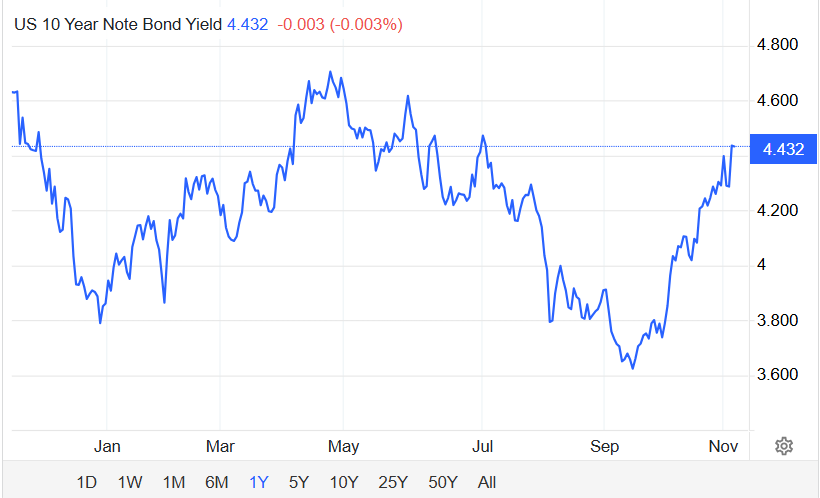
So we can see there is a conflict of signals here: the US needs a high interest rate to combat inflation and they also need a lower interest rate to manage the debt payment. I foresee that we will see more volatility in the US bond yield market.
Stock Sector Performance
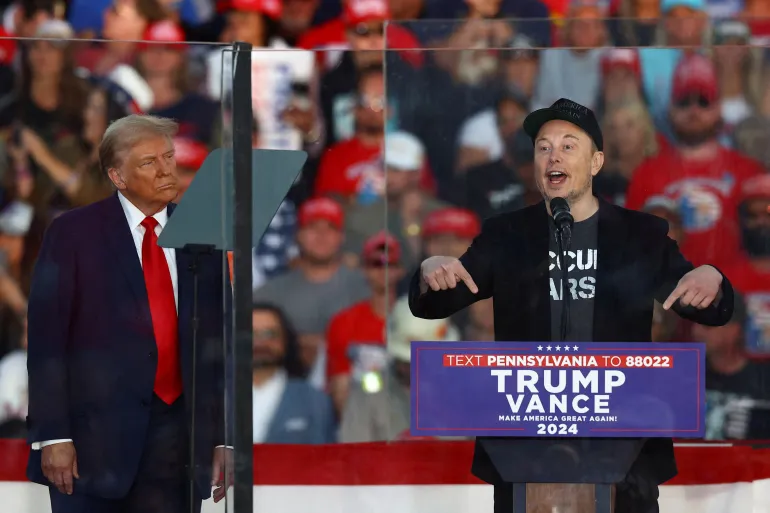
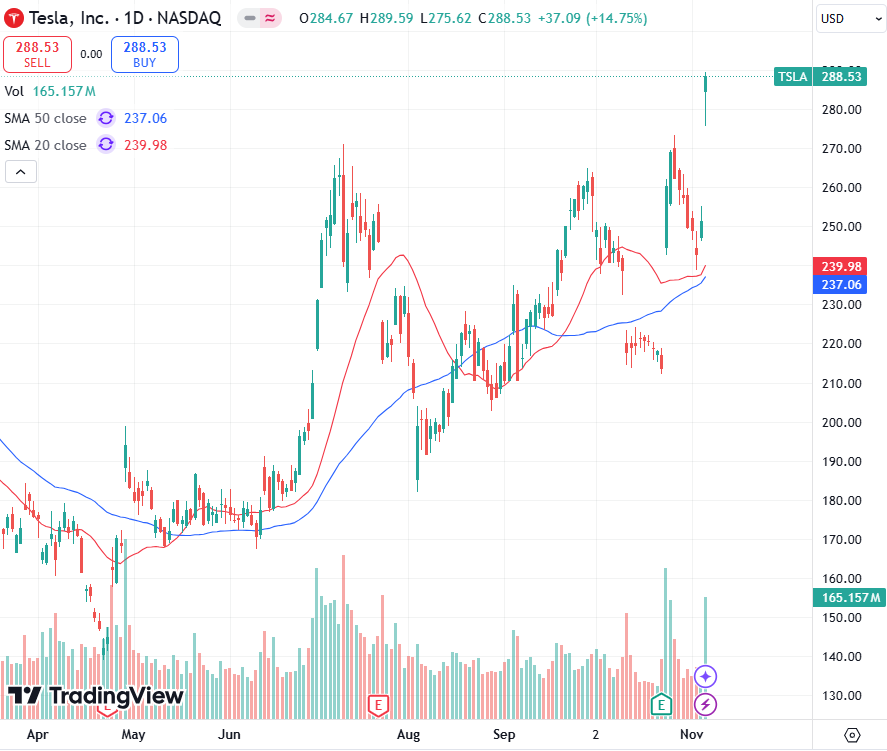
The obvious beneficiary of Trump’s winning is Telsa. Elon Musk’s high profit support on Trump again proved him to be a genius. He even said if Trump is not elected, he is “finished”.
Tesla’s stock didn’t disappoint its investors, we have seen huge jump immediate after the winning of Trump.
On the other hand, Trump’s policy will continue support the Information Technology sector, which is protected from China’s competition through Chip restriction.
Another possible Trump policy is lowering drug prices and expanding domestic production of essential drugs, which could probably benefit the Healthcare sector too.
Trump’s stance on climate change is likely to remain unchanged. He may repeal EPA regulations that mandate stricter electric vehicle standards, potentially benefiting traditional energy sectors like oil and gas, while hindering the growth of clean energy initiatives, in theory.
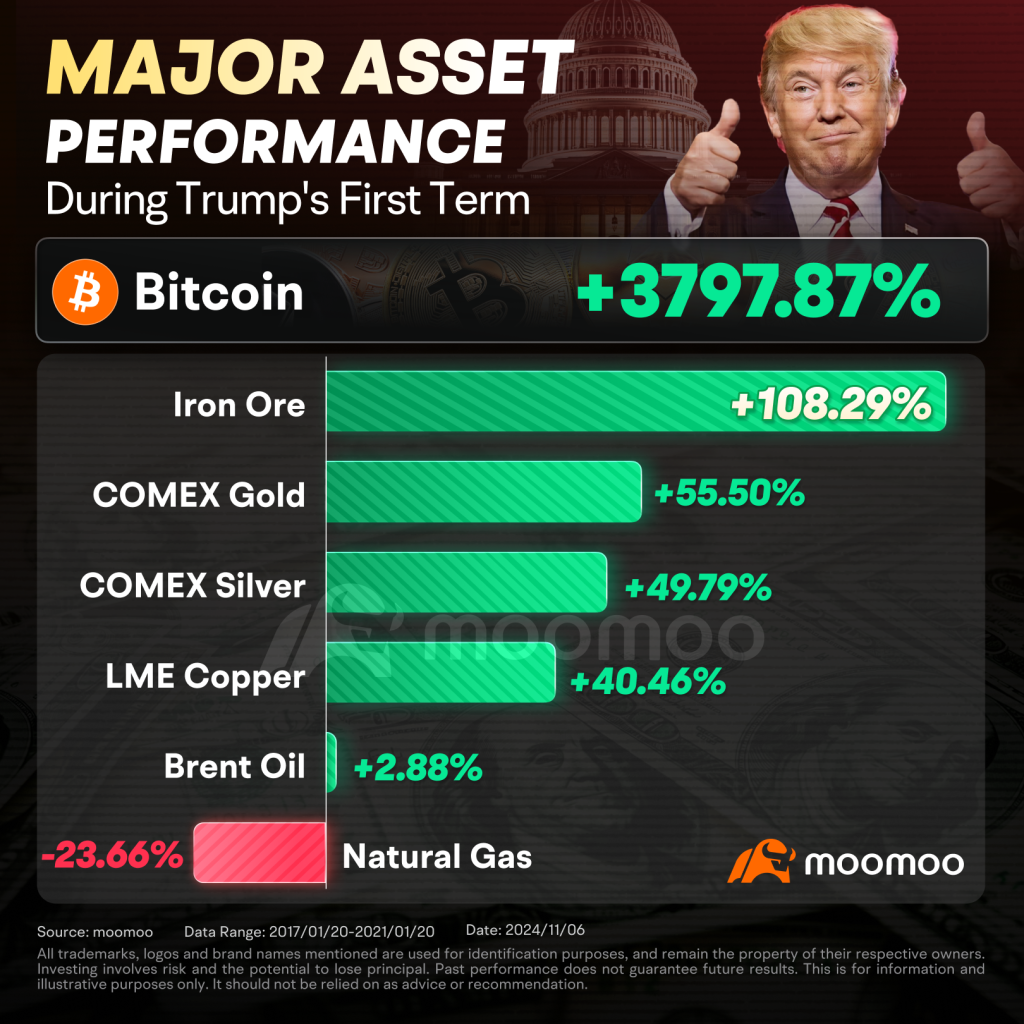
I said “in theory” because ironically, the energy sector was the worst-performing sector during Trump’s previous term.

The Bond Market’s Response
Interest rates affect bonds and income instruments such as REITs. The bond market has already adjusted to the prospect of a “red sweep,” with the 10-year Treasury yield rising significantly in the days following Trump’s win. This reflects market anticipation of potential inflationary pressures and tighter monetary policy.
Historical Stock Market Performance By Country
History doesn’t always repeat itself, but it rhymes.
As you can see from the chart below, during Trump’s first term, the US, India, and Vietnam were some of the best-performing markets globally. The theory is that due to the trade war, many manufacturing businesses have shifted from China to India and Vietnam.
Despite the trade war, China’s economy, including the Hang Seng Index, has shown resilience with positive performance. However, this growth comes at the cost of significant currency devaluation. While many predict dire consequences for China’s stock market under Trump’s presidency, I believe the impact isn’t entirely negative. As a businessman, Trump’s tough stance on China may be a strategic move to appeal to voters, with tariffs serving as bargaining chips.
Higher import taxes will likely lead to increased inflation in the US, as I’ve mentioned earlier. Interestingly, the US-China decoupling has accelerated China’s self-sufficiency development, fostering growth in domestic brands (“Guo Huo”). This shift has already boosted brands like Perfect Diary and Florasis, which have successfully tapped into Gen Z’s desire for individuality and self-expression. Ultimately, this growth in domestic brands may translate to increased profits for Chinese companies.
Interestingly, Singapore is the rare market which saw a decline in Trump’s term. We all know Singapore market has done well this year under the Biden’s administration, will there be a change of tide?

Commodities and Bitcoin
In an inflationary environment like the previous term, commodities and cryptocurrencies have done well.
The price of Gold and Silver has gone up 55.5% and 49.79% respectively.
Bitcoin, saw tremendous gains, increasing by 37 times during his presidency. Trump’s evolving stance on Bitcoin—from dismissing it as a “scam” to supporting it—has played a role in this growth.
Some of the infographics above are courtesy of moomoo, my favourite trading platform. If you want to access these timely researches, you can open an account using this link.
You can also get Starter Kits with FREE stocks and Cash Reward.
Let’s Summarize: What to Expect in the Coming Years
By now you can see, that the stock and bond market during Trump’s presidency isn’t that straightforward.
One of the key factors under Trump’s second term will be the issue of inflation. His economic policies, particularly trade protectionism and fiscal stimulus, could lead to higher inflationary pressures. This has implications for:
- The Federal Reserve’s Actions: If inflation rises, the Federal Reserve may be less likely to cut interest rates, contrary to Trump’s desire for lower rates. The recent rise in US Treasury yields signals that markets are pricing in higher rates.
- The US Dollar: The dollar’s recent strength is a reflection of inflationary expectations, which could create challenges for Trump’s efforts to boost domestic manufacturing. This could influence global currency markets and trade dynamics, especially in emerging markets.
It is a delicate balancing act to balance tax cuts with fiscal responsibility. Trump’s promise to cut rates while controlling inflation be sustainable? The coming months will likely provide the answer.
For Singapore investors, it’s crucial to stay informed, diversify your portfolios, and consider the impact of Trump’s policies on global markets.
The Fed rate decision in the next couple of days will give us some clue of the rate direction. But we can be sure that the next four years will be marked by volatility, uncertainty, and potential shifts in global economic and financial dynamics.
Well, it is time for me to reactivate my X (previously Twitter) again. After all, reading Trump’s X post is kind of fun.
I help my clients manage their investment portfolio and adapt the market changes through a proprietory GMC investment framework. If you are interested in finding out more about my services, submit your application using the form below.