


I was on an business trip in China, and over the past few days, I’ve received a steady stream of messages from clients asking the same thing:
“Ivan, should I add more gold (or silver) now?”
To put things into context, many of them already have a profitable gold position in their portfolio — they’re not starting from zero. But what caught my attention was this: gold has become a dinner-table topic in China. Even our tour guide brought it up.
I can totally understand why. Gold prices rallied aggressively in the past weeks, and everywhere you look, the fear of missing out (FOMO) is real.
But here’s the honest investor truth: when an asset becomes a national conversation topic, it usually means two things:
- The trend is strong, and
- Emotions are starting to overpower logic.
And that’s where normal investors get hurt. The same pattern repeated during the Oct 2025 Gold crash.
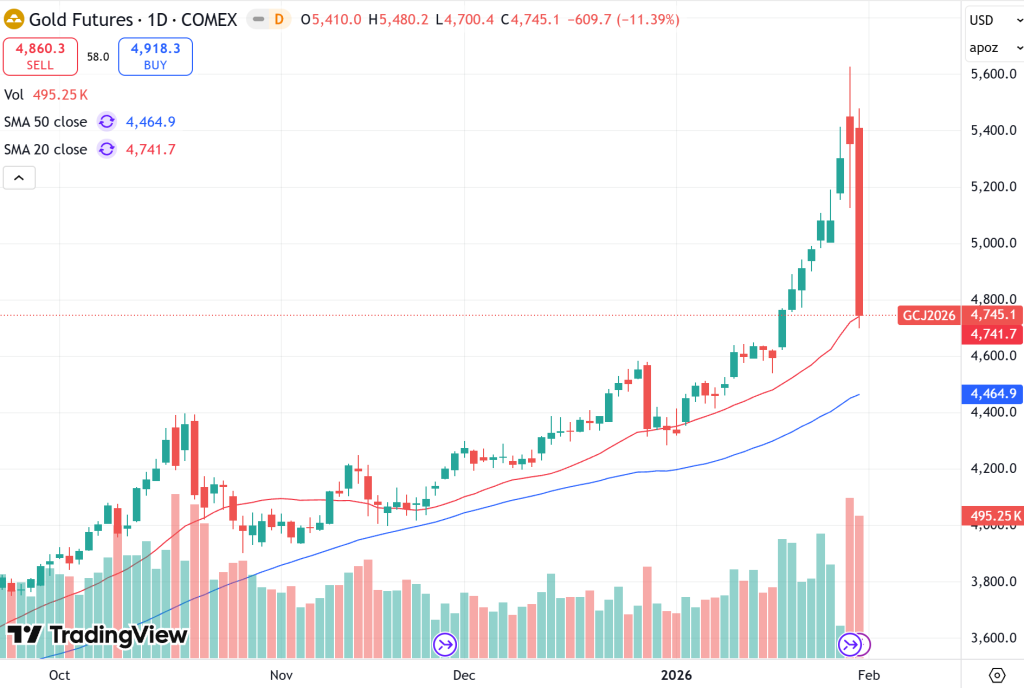
In fact, we just witnessed one of the most dramatic gold drawdowns in recent history. Reuters described it as being on track for the steepest daily drop since 1983.
In the futures market, the gold price plunged from the high of US$5,626 to around US$4,745 — a 15% decline in just two trading sessions.
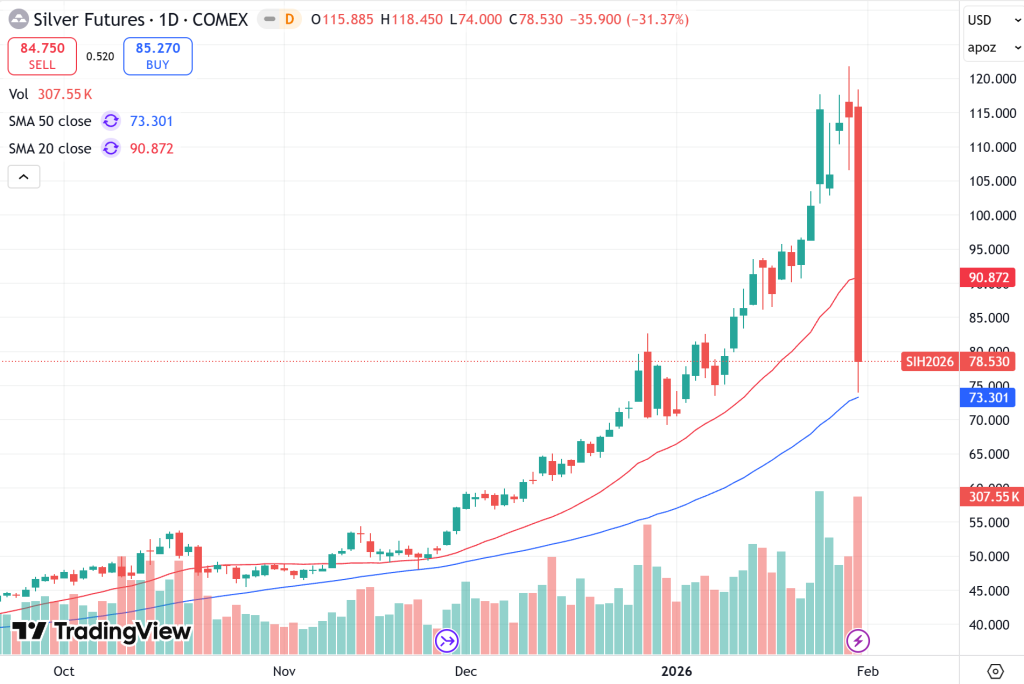
Silver, the volatile counterpart to gold, suffered an even steeper drop, tanking from roughly US$121 to US$78.5 — a 35% plunge!
All of this begs the question that you may ask:
Is this the end of the gold rally… or just a shakeout before the next leg?
Let me break this down in a way that helps you make a decision without being trapped by headlines or FOMO.
#1 Gold Is a Volatility Asset, Not a “Safe” Asset
I’ve said this repeatedly in my client’s monthly updates: Gold is not inherently a safe asset — at least not in the way most retail investors perceive it.
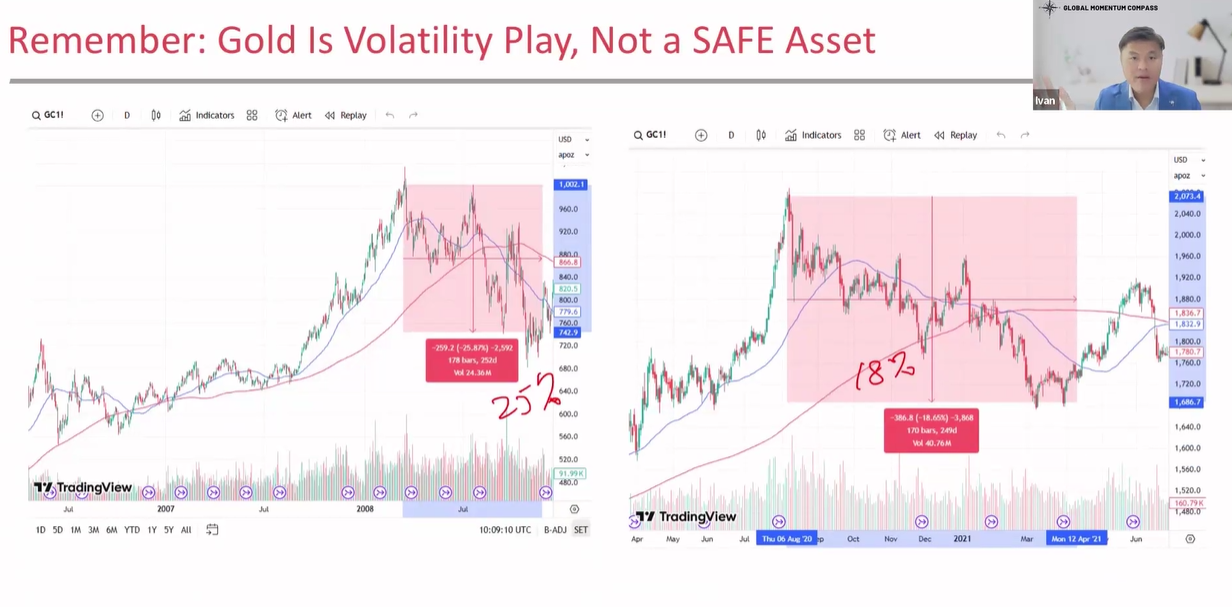
In times of extreme societal turmoil — say a country at war — owning tangible gold might offer some utility. But on a financial markets basis, gold behaves as a speculative asset linked to futures and derivatives trading, not a guaranteed store of value.
If you think about it, a gold necklace your mother bought for your wedding isn’t being traded daily at futures exchanges — but that’s exactly where the price discovery happens. Most market participants aren’t physically exchanging bars; they’re trading futures, options, ETFs, and structured contracts. These are instruments mainly used by institutions, hedge funds, and leveraged traders — not physical hoarders of metal.
And these big players can influence price movements just as much as global macro events can.
So let’s be clear: In the short term, gold is volatile because it’s traded like a financial asset — not held like jewellery in your drawer.
#2. Why Gold Crashed So Dramatically
Whether you’re bullish or bearish on gold, understanding why it can whip around like a roller coaster is essential.
Two forces are at play:
A. Futures Margin Calls
Gold isn’t just bought and sold like stocks — it’s traded predominantly via futures contracts, which involve leverage. That means traders put up a fraction of the contract value (margin) to control a much larger position.
When prices move violently — up or down — exchanges can raise margin requirements suddenly. This forces leveraged traders to either top up their accounts or close positions.
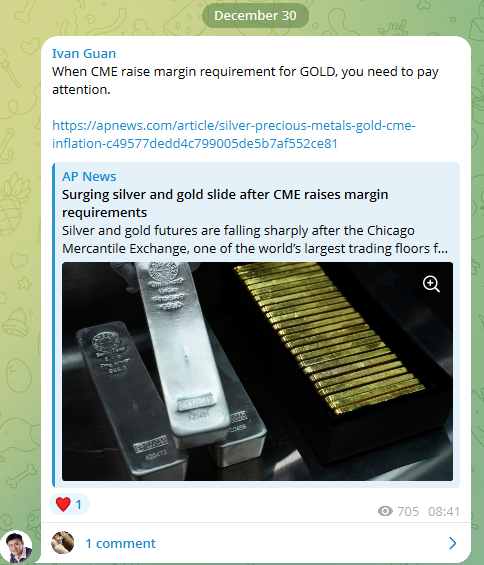
Just not long ago, CME (Chicago Mercantile Exchange), one of the world’s largest trading floors for commodities, raised margin requirements for gold, silver, and other metals. This is already a warning sign that the precious metal market is going for a roller coaster ride. I flagged this and warned investors on our Telegram channel.
Just imagine a downward spiral: when many participants are forced to liquidate simultaneously, prices cascade downward, amplifying the crash.
B. Inter-Market Trading and Portfolio Adjustments
The financial markets don’t operate in isolation.
Almost at the same time, Microsoft’s stock plunged 10%, wiping out US$360 billion in market value. At the same time, Bitcoin crashed below US$80K. These kinds of events often trigger cross-asset margin stress.
When a leveraged investor loses money in one asset class, they might be forced to sell another to meet margin calls or rebalance risk.
In practice, this may look like:
- Hedge funds are selling gold to cover losses in equities, or
- Reallocating capital to buy “discounted” quality assets elsewhere.
So the gold crash wasn’t just about gold — it reflected broader financial stress, liquidity issues, and forced deleveraging across markets.
In fact, the recent collapse of a major Chinese gold trading platform has shown how quickly enthusiasm can turn into crisis when markets move fast and liquidity becomes a concern — more on that later.
#3. So, Can Buy Gold or Not?
I know this is what you’re waiting for. But I’m going to be blunt:
If you want a simple yes/no, you’re asking the wrong question.
Because “buy or don’t buy” doesn’t matter as much as why you’re buying it.
That said, here’s my view.
If You Are Going For Short-Term Tactical Trade
If you’re looking at gold from a short-to-medium term trading perspective, then the mindset has to be very different.
This isn’t about buying blindly or assuming gold will “always protect you”. It’s about buying weakness, ideally when the market looks technically oversold, and doing it with clear entry levels and strict risk control.
Most importantly, don’t treat this as permanent wealth insurance. Gold is not your CPF. It’s not a fixed deposit. It’s a trade.
Seen this way, the recent sharp sell-off could actually create a tactical opportunity — especially if you’re expecting a technical rebound after such a violent move.
And if the macro backdrop shifts toward lower interest rates — for example, with new leadership at the US central bank — gold may benefit in the near term, because lower real yields tend to support precious metals.
Just remember: that’s a short-to-medium term play, not a long-term promise.
If You Are Going For Long-Term Strategic Allocation
Be cautious!
In a world where the US dollar remains dominant and the Federal Reserve still influences global capital markets, a perpetual gold rally against all other assets is highly unlikely.
Yes, central banks are adding to their gold reserves. But that’s part of diversification, not a guaranteed bullish signal. A long-term sustained bull run still requires broader economic conditions to align — and those conditions often flip before retail investors can capitalise on their gains.
In my December client meeting, I shared that we are likely at the end of the gold rally, though there could still be some legs to run.
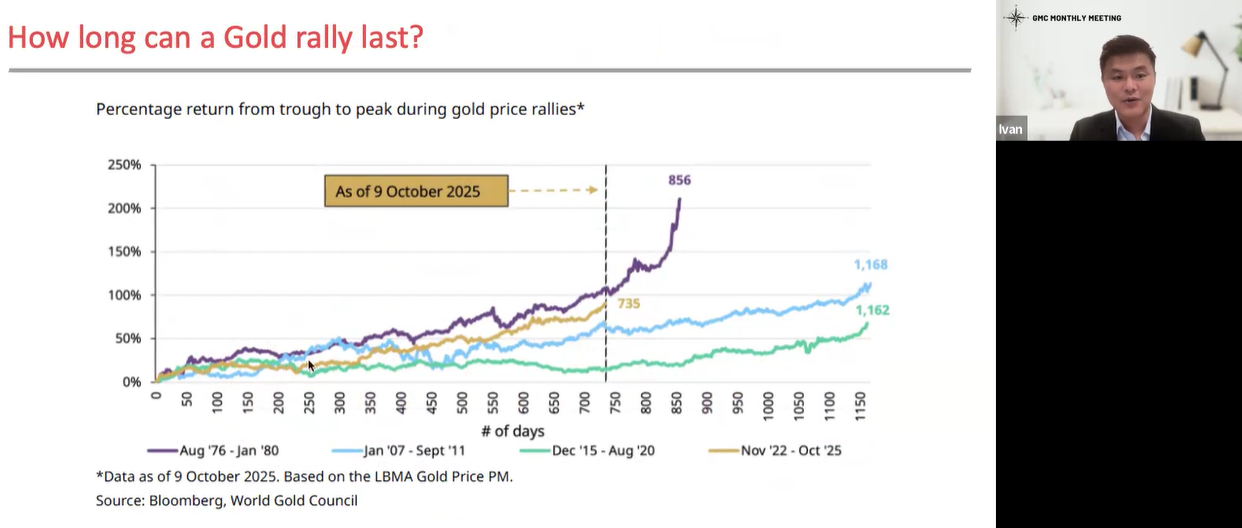
So my suggestion for long-term investors: Treat gold as a tactical allocation at this level, not a permanent anchor in your portfolio.
Gold can play a role — it can help during certain market phases, it can add diversification, and it can act as a short-term hedge when conditions line up. But it is not something you buy, forget, and assume it will compound quietly in the background like equities or income-producing assets.
There are multiple ways to access gold, each with very different risk profiles, costs, and liquidity:
- Physical gold
- Gold savings plans
- ETFs
- Unit trusts
- Other structured products
Choosing the right vehicle matters just as much as choosing the timing.
If you’re considering gold as part of your portfolio, make sure you’re using regulated instruments that fit your objectives, time horizon, and risk tolerance — not whatever is trending or easiest to access at the moment.
Additional Reading: How to invest in Gold in Singapore
#4. Be Wary of “Innovative” Gold Investment Schemes
Just days ago, headlines in China were dominated by a gold trading platform called JWR that effectively collapsed, leaving tens of thousands of investors unable to withdraw their funds — estimated losses exceed 10 billion yuan (US$1.4 billion).
Here’s what happened in simple terms:
JWR, Jie Wo Rui / 杰我睿, operated as an online gold trading and pre-pricing platform that let retail investors lock in gold prices through deposit-based contracts — akin to a leveraged bet on price direction.
When gold prices surged, and many customers tried to cash out simultaneously, the platform couldn’t meet redemption requests and quickly faced a liquidity crunch. Retail traders found themselves queued for withdrawals, and authorities have now launched investigations into the platform’s operations.

The critical takeaway is this: what looked like easy access to gold exposure turned into a dangerous product tied to unregulated financial bets. (And unlike regulated ETFs or exchanges, there was no safety net for investors.)
This is not the first time unregulated precious metals platforms have caused investor pain. Many long-term investors in Singapore can probably recall “Gold Guaranteed” in the previous gold cycle.
#5. Final Thoughts
Gold is not a simple buy-and-forget hedge. It deserves a place in a diversified portfolio, but strategically, not emotionally.
When used correctly — with proper sizing, clear intent, and disciplined risk management — it can be a powerful tactical tool in a portfolio. But expecting gold to deliver a sustained, long-term rally that outperforms all other asset classes requires very specific and extreme macro conditions. Without major structural shifts in the global monetary system, that kind of one-way bet is unlikely.
More importantly, I want you to look beyond gold when thinking about alternative assets in the next phase of the commodity cycle. History doesn’t repeat itself, but it often rhymes.
Historically, commodity bull markets rarely belong to just one asset. Leadership often rotates — from gold to silver, from precious metals to industrial metals like copper, and then into energy and even agriculture. Each cycle has its own drivers, but the pattern is familiar.
The real differentiator isn’t whether you picked the “right” commodity headline — it’s whether your asset allocation is structured properly. Chasing one asset at a time is how investors take unnecessary risk. Building exposure across assets, with intention and balance, is how portfolios become more resilient across cycles.
If you’d like help reviewing your asset allocation or figuring out how to build a more recession-resilient portfolio using regulated, robust investment vehicles, you can apply for a non-obligatory investment discovery meeting using the form below. We can explore how to position tactically based on your financial goals, time horizon, and risk tolerance.
And if you found this article useful, share it with your network, join our Telegram channel, or subscribe to my mailing list below.