


Last week, MOH dropped a major announcement that affects almost every Singaporean with an Integrated Shield Plan (IP) — and especially those who rely on riders for “full peace of mind”.
- From 1 April 2026, insurers will no longer be allowed to offer riders that fully cover a patient’s deductible.
- From 2028, even existing customers will be shifted to the new structure upon renewal.
- New riders will be simpler and about 30% cheaper, though you’ll need to share part of the bill.
In other words, the era of “high-coverage” riders is coming to an end.

Most people will see this as a downgrade or something “taken away”. Many are asking:
“What does this mean for me? Should I upgrade my rider now? Should I switch?”
As someone who has lived through every major shift in Singapore’s health insurance landscape — from the original MediShield in 1990, to the MediShield Life overhaul in 2015, to the 2018 clampdown on full riders and mandatory co-insurance, and most recently the Cancer Drug List (CDL) reform — I’m not surprised by this latest move.
So let me break down what this really means for you, and what you should do about it.
TL;DR — What You Need to Know Before Making Any Move
- This reform is bigger than it looks — premiums didn’t spike by accident.
- High-coverage riders were structurally unsustainable.
- Different groups will feel the impact differently (parents, retirees, private-hospital users, etc.).
- Don’t rush to upgrade or switch before understanding the root issues.
- I’ll share the key adjustments you should consider based on your profile.

Let’s Be Honest: IP Premiums Have Been Rising Out of Control
Many Singaporeans and PRs have Integrated Shield plans and the riders. And if you have paid attention to the premiums in recent years, you probably feel the pain.
In the past few years:
- 6 out of 7 insurers raised premiums in 2025 alone
- Some private-hospital IPs jumped 20–40% in one revision
- Riders saw repeated increases every 12–24 months
- Some clients told me their rider premiums doubled within a decade
These aren’t minor adjustments — they’re massive.
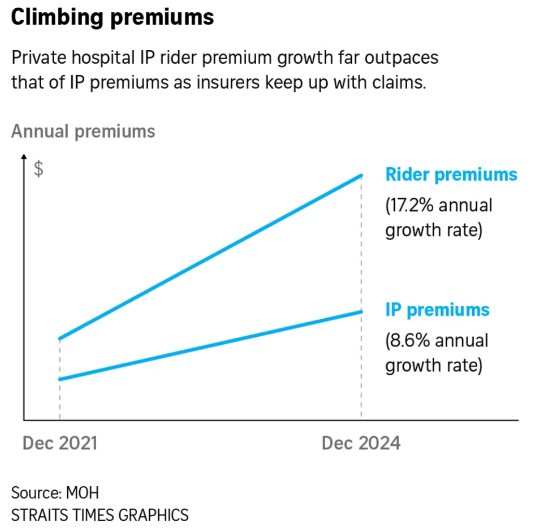
For the average family, IP has quietly become one of the fastest-growing household expenses, rising far faster than most people’s pay increases.
And for retirees, the pain is even sharper. These hikes aren’t just inconvenient; they’re stressful and unsustainable. Imagine paying a few hundred — sometimes over a thousand — extra every year just to maintain coverage.
Clearly, something in the system needs to be changed. Let’s look at why.
Why Did IP Premiums Spiral So Much?
The simple answer? The system has reached a point where structural change is unavoidable.
And this didn’t start yesterday.
Singapore’s national health insurance journey began in 1990 with MediShield. It evolved into MediShield Life in 2015, expanded into universal basic coverage, and has since gone through multiple adjustments — premium revisions, IP restructures, removal of full riders in 2018, and the recent CDL reset.
After working in the financial industry for two decades and advising clients for all the changes, I’ve summarised the five key reasons why premiums have spiralled:
#1. Riders Removed All Financial Friction
When riders cover almost 100% of the hospital expenses, people naturally behave differently.
- Families opt for overnight stays “just in case”.
- Doctors order more tests because “insurance pays”.
- Patients choose private specialists for simple issues.
This is human nature — not anyone’s fault — but it pushes claims higher.
Back in 2018, MOH had already carried out a major overhaul of IP riders. At that time, insurers were ordered to remove all 100% coverage riders and introduce a mandatory 5% co-insurance, meaning patients would have to pay at least 5% of their bill, up to a cap.
This was the first attempt to address the problems caused by “buffet-style” healthcare consumption. The move did slow claims growth for a while, but as private hospital costs continued rising and older full-coverage riders remained in force, premiums still escalated — which eventually led to the current round of reforms we’re seeing today.
#2. Over-servicing by Providers
When patients pay nothing, providers behave differently, too. Doctors and hospitals naturally provide more services when cost is not a concern. Data repeated this for years:
- Non-panel specialists charge significantly higher fees
- Claims are higher where riders dominate
- Bills increase when out-of-pocket costs drop
To manage this, insurers have, in recent years, shifted IP policy terms to encourage the use of panel doctors. Claims from non-panel specialists tend to be higher and more unpredictable, so guiding patients toward panel doctors — who follow agreed fee benchmarks — helps keep bills more consistent and premiums more sustainable.
This has somewhat contained the costs in the public-sector, while private-hospital users (especially those with rich riders) behave much less price-sensitive.
#3. Private Hospital Costs Escalated Much Faster
Over the past decade, private hospital bills have grown significantly faster than public-sector costs. Various CNA and MOH reports point to private medical fees rising around 7–10% a year, well above general inflation. Naturally, IP plans that cover private hospitals end up absorbing this inflation directly.
Research shows that full-rider bills were about 60% higher than non-rider bills, even though rider holders tend to be younger and healthier.
Taken together, the pattern is clear: public hospital costs remain relatively contained because of subsidies and structured fee controls, while private hospital users — especially those fully shielded by rich riders — behave far less price-sensitive, leading to faster cost escalation on the private side.
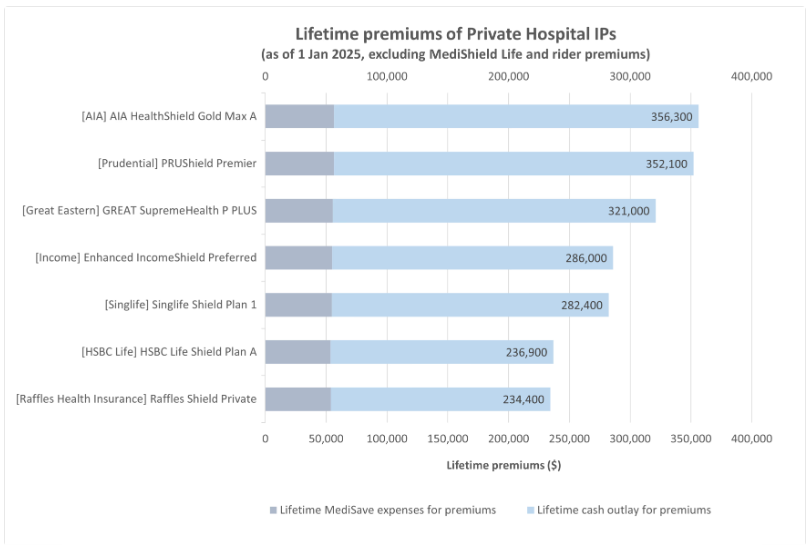
Now, the question is, is the premium to enjoy the private hospital services justified? If you look at the chart below from MOH, the Lifetime premiums of private hospital IPs (excluding the Medishield Life and rider premiums) are already more than $300,000.
#4. Moral Hazard Across the System
MOH summarised it clearly in the publication Ensuring the Sustainability of Private Healthcare Insurance:
A significant root factor is the design of private health insurance. Insurers know that policyholders are worried about unexpected large hospital bills, so they offer plans with generous coverage and benefits through Integrated Shield Plans (IPs) and riders, covering almost to the last dollar with little copayment.
But when someone else – in this case, insurers – pays for almost the entire bill, the dynamic between patients and providers changes. There is tendency for over-servicing and unnecessary treatments. This is backed by data. The likelihood of a patient with a private hospital rider making a claim is 1.4 times that of a patient without a rider. The size of the claim is also on average about 1.4 times that of a patient without a rider.
This is classic moral hazard — not intentional misuse, but a system design that unintentionally encourages higher consumption which leads to a predictable feedback loop.
This creates a vicious loop:
High coverage → higher usage → higher claims → higher premiums → even higher usage
#5. Aging Population, Early Underpricing & Rising Cancer Costs
Another major pressure point on premiums is Singapore’s rapidly aging population. According to a CNA article, Singapore is projected to attain “super aged” status in 2026, as more than one in five here is expected to be 65 years old or older. By 2030, one in four Singaporeans will be aged 65 or above.
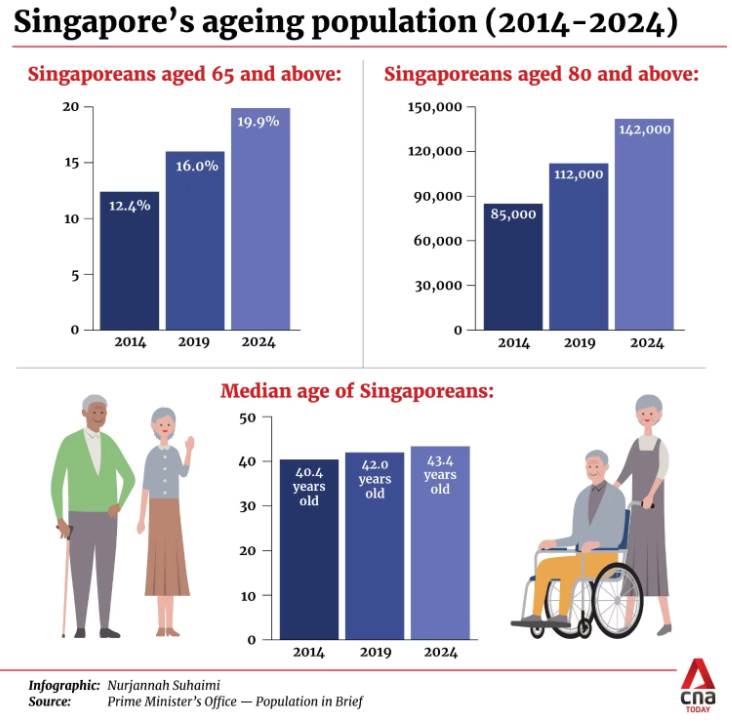
As the population gets older, insurers are seeing more frequent and more severe claims — including cancer treatments, chronic illnesses, joint replacements, heart procedures, and ICU stays. These large claims naturally put sustained pressure on the insurance pool.
At the same time, many insurance premiums were underpriced in the early years as insurers competed for market share. Premiums stayed artificially low even as claims grew heavier, creating losses that insurers later had to correct with sharp premium hikes.
This problem was especially visible in cancer care. Before 2023, the cost of cancer drugs rose dramatically, and MOH noted that cancer drug claim costs under IPs had grown far faster than other types of claims. To address this, MOH introduced the Cancer Drug List (CDL) — a curated list of clinically proven and cost-effective cancer drugs with regulated claim limits. The intention was to rein in runaway cancer drug costs and prevent a small number of extremely expensive claims from pushing up premiums for everyone.
In other words, the CDL was the first major step in stabilising IP premiums by addressing high-cost claims.
The current rider overhaul is the next step, targeting structural incentives and overuse.
Together, these factors — an aging population, earlier underpricing of rich riders, and escalating cancer drug costs — formed a long-term cycle of premium pressure that ultimately made system-wide reform necessary.
I Applaud the Government’s Intervention
From my perspective, if MOH had not stepped in, IP and rider premiums would have continued rising at double-digit rates every few years. And when that happens, it’s not the wealthy or the young and healthy who suffer. It’s the groups who rely most on protection:
- middle-income households
- retirees with limited income
- people with medical conditions
- parents paying premiums for multiple children
- families already squeezed by rising costs
By restoring meaningful cost-sharing, MOH is essentially resetting the system so:
- medical usage becomes more responsible
- premiums stay affordable
- the risk pool stabilises
- healthcare inflation is moderated
- families are protected from runaway costs
It’s a realignment to ensure our system survives the next decade and beyond.
My Adviser’s Perspective — An Opportunity to Plan Better
Regardless of your life stage, the principle remains:
Insurance should cover big risks, not eliminate every small cost.
Paying a deductible every few years is normal. Paying $2,000–$3,000 annually to avoid it may not be.
These changes will affect each person differently, but they open the door to building a more disciplined, sustainable healthcare strategy. If you fall into one of the profiles below, here are my general recommendations. (Always consult your adviser for customised advice.)
#1. Parents with young children
If you have young children, you probably visit hospitals more often — and you may have relied on full riders for peace of mind. With cost-sharing returning, some out-of-pocket expenses will be normal, especially if you’re paying premiums for multiple kids.
How to plan:
- Build a small medical buffer fund within your emergency savings
- Choose panel doctors for more predictable costs
- Reconsider whether private-hospital plans are necessary for every family member
#2. Frequent private-hospital users
If you prefer private hospitals — whether for comfort, shorter waits, or a trusted specialist — you’ll feel these changes more directly because you will now bear a larger portion of the bill.
How to plan:
- Reassess whether the private-hospital tier is still worth the premium
- Strengthen your Guaranteed Income layer to support future medical spending
- Make full use of pre-authorisation and panel specialists to control costs
#3. Retirees and pre-retirees
If you’re approaching or already in retirement, your healthcare needs will likely rise while your income may not. Budgeting becomes critical at this stage.
How to plan:
- Incorporate medical expenses into your retirement cashflow planning
- Set up a dedicated healthcare sinking fund
- Ensure your medical protection layer is supported by stable income within your Kueh Lapis Retirement Framework™
#4. Younger, healthier adults
If you’re younger and in good health, you may benefit the most from the new structure. But don’t stop there. With riders becoming simpler and cheaper, your savings can be redirected into long-term growth.
How to plan:
- Channel rider savings into investments to build your future healthcare fund
- Start building a small medical emergency buffer
- Avoid overpaying for coverage you don’t need
Final Thoughts — What This Really Means for You
There’s no need to panic or rush. Buying a rider today won’t “lock in” old benefits — all riders will still transition by 2028.
A wiser approach is to wait for updated benefits and premium tables and review your IP strategy thoughtfully. Consider whether you should keep your current plan, switch ward class, adjust your rider, or reduce premiums meaningfully.
And yes — expect some out-of-pocket expenses.
These changes may feel uncomfortable at first, but they prevent something far worse: a healthcare system becoming so expensive that only the wealthy can afford protection. This reform helps keep premiums affordable, encourages responsible use, and makes the system sustainable for decades.
I’ll continue monitoring developments closely and guide you through every step. Remember to join my Telegram channel and subscribe to my Retire Rich Weekly newsletter.
Got questions or comments about the Integrated Shield Plan changes? Leave a comment below, I’d love to hear from you.